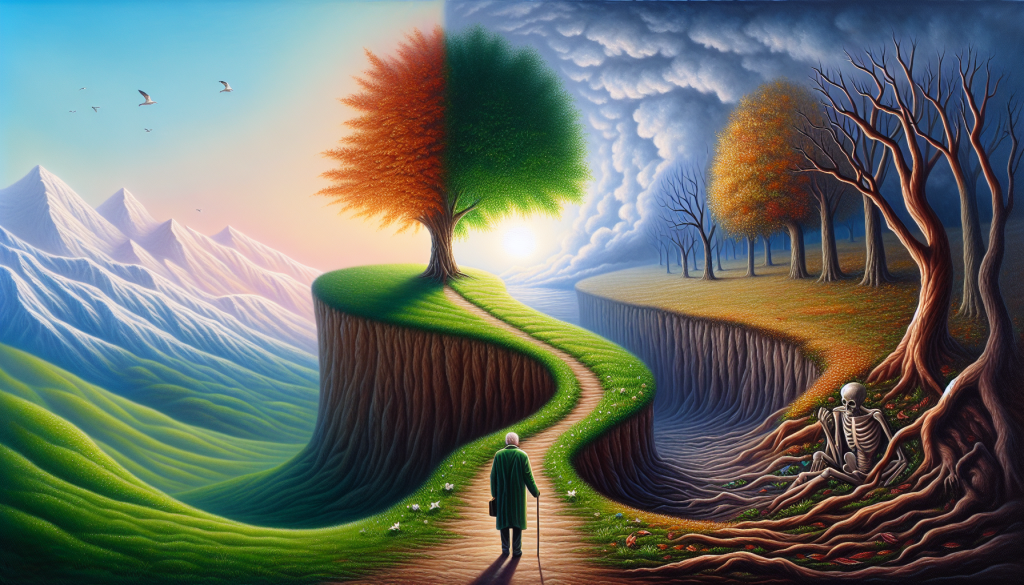
We think that which precedes a thing must be its prerequisite, but I’ve observed a fallacy in this thinking—that if A precedes B, and B follows A, then doing A must be necessary to do B, and that one cannot do B without first doing A.
Let being young equal A, and being old equal B, and it looks like a logical syllogism. It appears that B follows A; it seems that being old follows being young. However, A and B are disconnected because being young and being old are distinct and nonsequential.
I believe this to be the case because I am doing things now that I, as a younger version of myself, even if the younger version of myself had the skills I have now, would never have been able to do if the tasks of my older self had been reassigned to me my younger self.
For instance, I live in my middle-aged body and have the confidence to go shirtless in public. The young man in me, who was fit as a grocery bagger and cart pusher when he was 22, was embarrassed to be shirtless in public.
I work hard, and I carry unfair burdens. Yet, I still work hard. I also come home from working hard, and I work harder. I give my energy to my career and organization, and then I go home and give the reserves, which swell in abundance, to my wife, house, friends, and family. Less work is spent on me, and the work spent on me is aligned with serving others better. The young man, with his youth and vigor, pales to the aging man, with his aches and discipline.
As a young man, I wanted position and power. As an aging man, I want responsibilities and purpose. I would trade a pound of position for an ounce of responsibility. The young man wouldn’t understand. He would collapse—and did collapse—under the burdens.
How did I go from being young to growing old? I don’t wait for time anymore; instead, I earn it. By that time, the young man would quit, and he did. Looks like I was the last man standing. As I said, growing old is not a young person’s game.
 Dom the Writer
Leave a comment