My wife and I watched The Fog by John Carpenter. For some parts of the film, I was zzz-ing with boredom. For other parts, I was amused. What doesn’t make us laugh formerly made us laugh; what makes us laugh formerly made us shriek.
But for one element of the movie, vi algo, I saw something. What I saw was a pivotal character as a solitary radio DJ. Pivotal characters are the persons or things in a story that the story wouldn’t have happened without. The story was all connected to them—the problem, the solution, the insight.
The pivotal character, Stevie Wayne (played by Adrienne Barbeau), is an FM radio DJ in a lighthouse. The radio station sits on a rocky coast. Stevie broadcasts from underneath the bonnet, somewhere in the lantern room. The DJ booth is filled with nostalgia, carts, and records.
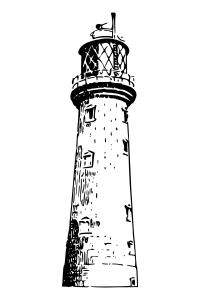
Her listeners are the townsfolk and mostly fishermen and boaters. Her vantage point above the town, the bay, and the water makes her the surrogate narrator to the filmmaker as the Fog rolls in and out and transports the ghosts of a 100-year-old shipwreck. In one scene, she is broadcasting a play-by-play of the fog as it descends upon the town and begins to descend upon her. She selflessly stays on the air, putting herself in harm’s way as a live broadcast first responder.
In this film, let’s think about the values related to live radio broadcasting. An FM radio DJ illuminates—quite literally—the geographic peril facing her neighbors. She announces jazz, a close-to-universal sound, and weather, a universal experience. Most people know her by her voice, which sounds like a good siren that alerts people to danger instead of drawing people to it. She is a single mother who loves her son, friends, and fellow humans.
When movies age, they tell us more about the past and the present than what was intended. The arts aged in oak dismantle the nudity of hype and reward the palate of patience. The humble radio DJ—a calling that used to be held in high regard, a once competitive profession that is disappearing and falling by way of pre-recorded amateurs—is the real hero in this story.
Television shows and movies from the ’70s, ’80s, and ’90s have favored the radio DJ and radio stations. Airwaves were the battleground of media exposure before the internet. Now, they are a declining front in the media wars.
I think about movies like Play Misty for Me, Pump Up the Volume, Airheads, UHF, and Good Morning, Vietnam. I also think about TV shows like Frasier, WKRP in Cincinnati, and News Radio. If radio DJs were not the heroes, they were at least cast as hopeless, if not narcissistic, minions of commercial and government forces.
As we saw that which was possible through the internet, and as high-speed wireless internet and data became more ubiquitous and affordable, audiences became less interested in radio stations and more interested in things like podcasts, audiobooks, music streaming, and even satellite radio (which is really “cable radio” without the cable).
The transition between broadcast radio and internet radio has not been analogous. There are numerous key differences, but for the sake of this blog post, I want to focus on the DJ. The differences relevant to this blog post are the gatekeeper and the market share.
Radio DJs, for better or worse, went through screening processes. Media was a landscape of gates and rigid gatekeepers. On the internet, the gatekeeper is an internet service provider, the government, or the network administrator. However, in broadcast, individuals and small groups act on the market and gut data that say, “This is what the audience wants.”
The problem with broadcast gatekeepers is the lack of legitimacy, validity, and reliability. I will offer this conjecture: most gatekeepers are the luckiest or unluckiest guessers on the planet. The audience is always a fiction. In as few words as possible, they know what is what, but they don’t know what is what, they just strut, WTF.
Gatekeepers are an added burden to what the US Constitution does for us and what technological advancement has enabled for us. They have done more harm than good. They are agents of monopolistic expression, ringers of imagination’s death knell, bureaucrats of meaning.
We have learned more about our world through social media than cable news; if we want to weigh which deals with sensationalism and misinformation more, they are equal. We don’t have free speech when someone with a federal license to broadcast on public airwaves decides who can speak and what music is heard. Video didn’t kill the radio star. Internet didn’t kill the video star. But internet gatecrashed the gatekeeper czar. Creative sovereignty is melting the divine right of gatekeepers.
I digress. I’ll put a pin in that idea.
The point was that as we progress into this new phase of the industrial age, one characterized by new technology and new technocrats, the characters we have relied upon for insights are changing scenes. The DJs are moving to new platforms.
But I wonder what will happen to the radio. In the past twenty years, the number of shows and movies that feature radio as central to the story has fallen. The number of movies about the internet and podcasts has increased (if you haven’t seen Vengeance, I recommend you do). It reappears as a fallback plan in case the world comes crashing down, like in The Last of Us. In addition to hearing radio less, we see it less represented. This is a really big deal because media is self-referencing, and when it stops referencing part of itself, it’s a grim indicator.
I believe some people are staying behind to hold the infrastructure together. I think I’m doing that at KSYM 90.1 FM, where I host a weekly radio show. Yes, we do have students still coming to learn broadcast, and they want to do radio—a lot of talk radio. If you’ve got electricity and a receiver, you can listen to radio without a subscription. It’s still one of the most accessible ways to reach people.
I hope radio doesn’t just become a hobby interest. I hope it becomes all community-based. That is to say, I want all radio to become public radio. When capitalism doesn’t know what else to do with it, I hope the people get it back. Then, we can be heroes just for one broadcast.
 Dom the Writer
Leave a comment