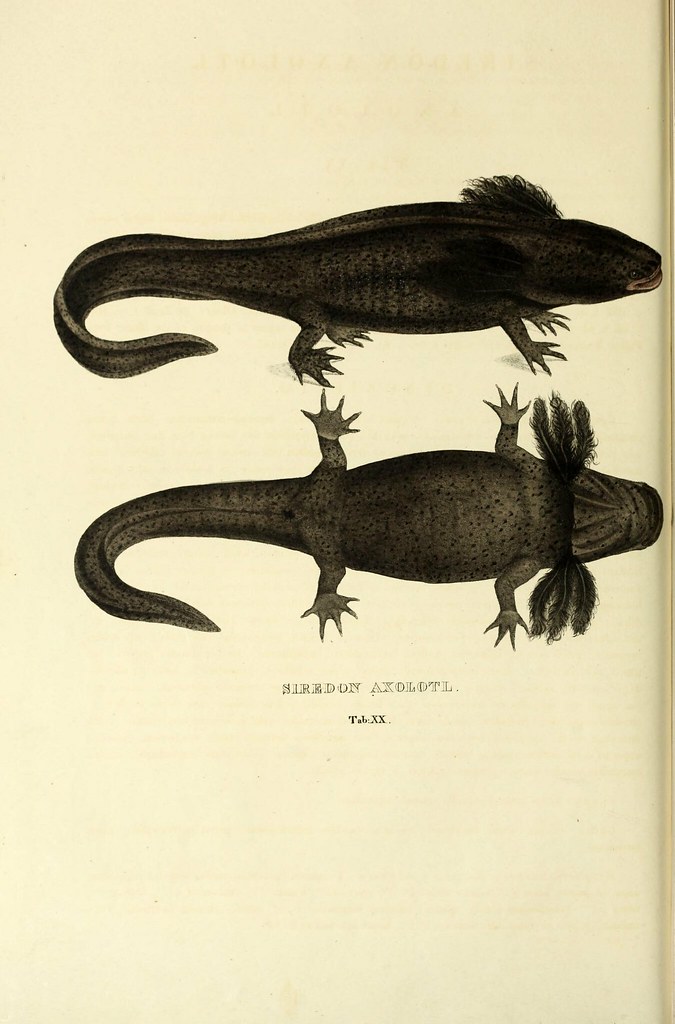
Axolotls are Mexican salamanders that remain in their larval forms. They develop reproductive organs, but they never become full adults. Axolotls live in endless pupation, hovering in “indifferent immobility,” as the Argentinian author Julio Cortázar described.
As a millennial, I feel like an Axolotl, especially because I bought into the growth mindset, which left me suspended in deathless growth, neither a larva nor an adult. For all I know, I am an axolotl.
I prided myself on having a growth mindset, believing that my talents could be developed “through hard work, good strategies, and input from others.” I read and write avidly. I pick up new skills. I juggle new and multiple endeavors at once.
Antithetical to the growth mindset is the fixed mindset. Advocates for the growth mindset see folks with fixed mindsets as closed-minded, stubborn, and unchanging. I didn’t want to be any of these things, so I mindlessly rejected this notion of the fixed mindset.
I wasn’t alone in this thinking. The growth mindset philosophy is found in higher education, corporations, LinkedIn, and many books. It promises that anyone can gain prosperity through a neverending cycle of professional development, schooling, micro-credentials, and re-actualization.
However, with the growth mindset, I was always becoming someone else whenever I was dissatisfied with who I was. Ultimately, I never became someone else because I always try to become someone else. I was locked in the endless pursuit of joyless pleasures, neither coming nor going. I had no rock to stand on. And this is the problem with the growth mindset. It’s a trap between states of being. It’s an axolotl.
I needed more than the growth mindset to figure out my life’s purpose. Having purpose means having determination. It means having a firm, unwavering reason for doing what we do. The growth mindset is a foundation—if anything—for an indecisive, uncommitted life in which nothing is fixed and purpose cannot be determined. A sense of purpose is too devout for the growth mindset, so the determined mindset is biasedly labeled as the fixed mindset, as if determination was wrong.
Recently, I looked into a mirror and saw not someone becoming someone else but a man who had already arrived. I am approaching my 40s. I possess many wonderful intangible assets. Still, I own hardly any assets that can be exchanged for necessities such as quality food, housing, and clothing.
I saw a man worthy of love and forgiveness who readily gave love and forgiveness too. Change is always occurring; neuroplasticity is proof of that. But I need to commit to this man I see, this man who I am, and this man who needs to stand on a rock of personhood. Then, he will achieve actualization through a commitment to himself, the very thing that the growth mindset seeks to annihilate constantly.
In my reflection, I abandoned the growth mindset and doubled down on my personhood. It was a sobering experience. No longer was I confused by my mind or embarrassed by my feelings. I no longer saw myself needing perpetual leveling-up. I am a definitive adult ready to work, serve, and provide as he was and will be. Growth is a byproduct of determined labor, not a motivation for it.
Millennials—and people generally—cannot rely on becoming someone else. We are already who we are. We are not coming; we have arrived. To break free from endless pupation, we don’t need more growth. We need to break free from our chrysalises and spread our wings. They are fractured like stained glass windows, perfectly flawed but ready for flight, refracting Godliness in the light.
 Dom the Writer
Leave a comment